Signs Your Older Home Wiring Needs an Upgrade
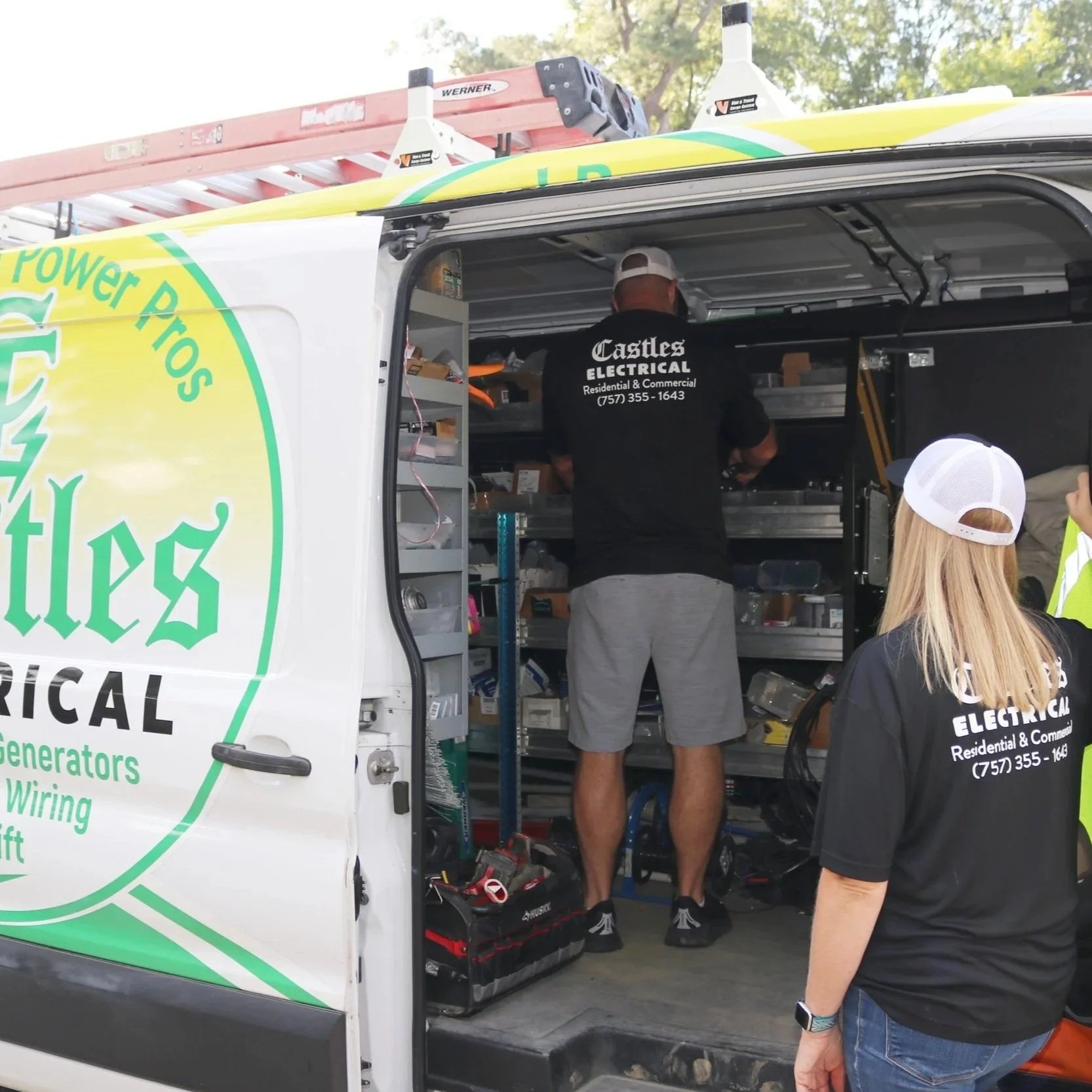
Getting ahead of wiring problems while they are still in the signal stage is both safer and less expensive than responding after the warning signs have given way to actual failure.
The kitchen light flickers whenever the refrigerator kicks on. You have been calling it a house quirk for two years. Or it is the breaker in the hallway that trips whenever you run the space heater and the hair dryer at the same time, and you have just learned to unplug one before turning on the other. These are not random annoyances. They are signals from an electrical system that has been operating beyond its designed capacity or showing the effects of age that are becoming visible. In older homes across Chesapeake, VA, these patterns are common enough that many homeowners have normalized them, which is exactly the problem.
Aging wiring does not fail all at once in most cases. It degrades gradually, and the symptoms that emerge along the way are easy to rationalize as the house being old or the wiring being finicky. By the time something actually fails, whether that is a breaker that will not stay set, an outlet that stops working, or a more serious event, the degradation has usually been underway for years. Castles Electrical works in older homes across Chesapeake, VA, frequently, and the pattern is consistent: the homeowners who call after something fails almost always mention a list of smaller symptoms that they noticed and accommodated rather than investigated. Getting ahead of wiring problems while they are still in the signal stage is both safer and less expensive than responding after the warning signs have given way to actual failure.
How Old Is Too Old? Understanding Wiring Lifespan in Chesapeake Homes
Wiring does not have a universal expiration date. Still, it does have a reasonable service life that depends on the type of wiring, the conditions it has been exposed to, and whether the system has been properly loaded and maintained over the years. Older homes built before the 1960s may still have their original wiring insulation, which can become brittle and fragile over decades, particularly in attics where temperature cycling accelerates its deterioration. Homes from the 1960s and 1970s may have aluminum branch circuit wiring, which has specific maintenance requirements that many homeowners are unaware of. Homes from the 1980s and 1990s are generally in better shape from a wiring standpoint but may have panel and capacity concerns related to the evolution of household electrical demand.
The honest answer to how old is too old is that it depends on what the wiring has been through and what it has been asked to do. An original wiring system in a home with modest, consistent loads and dry, stable conditions may be in better shape than newer wiring in a home that has been heavily modified by successive owners, exposed to moisture, or repeatedly stressed by overload conditions. What matters more than the calendar age of the wiring is the condition of the insulation, the integrity of connections throughout the system, and whether the system, as it exists today, is adequately sized for the home's current electrical load. A licensed electrician evaluating an older home is assessing all of those factors, not just noting the year the home was built.
What Aluminum Wiring in 1960s and 1970s Homes Means for You
Aluminum branch circuit wiring was widely used in homes built between roughly 1965 and 1973, when copper prices made aluminum an attractive substitute. The wiring itself is not inherently hazardous under normal conditions, but it behaves differently from copper wiring, requiring specific attention. Aluminum expands and contracts more than copper with temperature changes, and over years of heating and cooling cycles, this movement can loosen connections at outlets, switches, and panel terminals. A loose connection creates electrical resistance at the connection point, and resistance creates heat. Sustained heat at a connection point inside a wall is a fire risk that develops without visible warning until it is significant.
The National Electrical Code and fire safety organizations have established remediation approaches for aluminum wiring. The most common approach for residential aluminum wiring in Chesapeake, VA, is installing CO/ALR-rated devices at outlets and switches, which are specifically designed for use with aluminum conductors, and applying an anti-oxidant compound at all connection points, including the panel. A more comprehensive approach involves installing COPALUM crimp connectors or AlumiConn connectors to join short copper pigtails to the ends of aluminum conductors, which then connect to standard copper-rated devices. The right approach for your home depends on the condition and extent of the aluminum wiring and the specific configuration of your system. Castles Electrical evaluates aluminum wiring in older Chesapeake homes and provides a clear recommendation based on inspection findings rather than a one-size-fits-all approach.
Warning Signs That Homeowners Tend to Ignore
The warning signs that an electrical system is degrading are often familiar to homeowners in older neighborhoods who have learned to live with them. Lights that flicker when large appliances cycle on are a common signal of a connection that has loosened or degraded, either at the outlet or light fixture, in a junction box, or at the panel itself. Outlets that feel warm to the touch, even when nothing is plugged in, indicate resistance heating at a connection that should not be generating heat. Breakers that trip without an obvious overload event, or that will not stay in the on position after being reset, are telling you that either the circuit is being asked to do more than it was designed for, or the breaker itself has degraded to the point where it no longer functions correctly.
A burning smell that appears briefly and then dissipates, particularly near an outlet, switch, or panel, is among the most serious warning signs and should prompt an immediate call to a licensed electrician. The smell indicates insulation or other material being heated by an electrical fault, and the intermittent nature of it does not make it less serious — it makes it harder to locate, but no less dangerous. Discoloration around outlets or switch cover plates, charring around receptacle slots, or visible scorch marks anywhere near electrical components are physical evidence of prior overheating that needs to be evaluated immediately. Castles Electrical encourages homeowners across Chesapeake, VA, to treat any of these signs as a reason to schedule an evaluation, not as a reason to reset the breaker and move on.
The Panel: What It Looks Like When It Needs to Go
Older homes in Chesapeake, VA, often have panels that were adequate for the electrical demands of their era but are undersized for the way those homes are used today. A 60-amp or 100-amp service was the standard for much of the mid-twentieth century, and those service levels made sense when a home's major electrical loads were lighting, a refrigerator, and a few small appliances. The introduction of central air conditioning, electric water heaters, electric ranges, and now EV chargers and whole-home electronics has changed what a residential electrical system needs to handle. A panel that is chronically at or near its capacity ceiling runs hotter than it should, wears its components faster, and cannot accommodate the addition of new circuits without something giving way.
Beyond capacity, certain panel brands from earlier eras carry specific reliability concerns that homeowners in older neighborhoods should be aware of. Federal Pacific Electric Stab-Lok and Zinsco panels, both widely installed from the 1950s through the 1980s, have documented histories of breaker failures under overload conditions. The concern is not that these panels cause fires on their own, but that breakers that fail to trip under overload allow the wiring downstream to carry more current than it is rated for, which generates heat in the wall. If you have an older, and you are not certain which brand of panel you have, locating the panel and checking the brand name on the interior is a worthwhile first step. If it says Federal Pacific or Zinsco, scheduling an evaluation with a licensed electrician is a practical next move.
When an Inspection Makes More Sense Than Waiting
A proactive electrical inspection in an older home does not require a specific triggering event. If your home is more than 30 years old and has not had a licensed electrician evaluate the system in recent years, the inspection is worthwhile on its own terms. An evaluation provides a current, accurate picture of the condition of the wiring, the panel, the grounding system, and GFCI coverage throughout the home. It identifies what needs attention now versus what can be monitored over time, and it gives you a prioritized list of improvements rather than a vague sense of worry about what might be going on inside the walls.
The practical benefit of proactive inspection versus reactive repair is significant both financially and in terms of disruption to your household. Electrical repairs performed on a planned schedule, with appropriate preparation and permitting, are consistently less expensive than the same repairs performed as emergency work after a failure. They also do not involve the additional costs associated with damage caused by the failure itself, such as the replacement cost of appliances or electronics affected by a wiring fault, or the cost of addressing fire or smoke damage if an overheating connection goes far enough down that path. Castles Electrical offers inspections for older homes in Chesapeake, VA, specifically designed to give homeowners an honest, prioritized picture of their electrical system without selling unnecessary work.
Urgent Electrical Safety FAQs Every Homeowner Should Read
Castles Electrical is the one-stop destination for electrical panel installation, electrical panel replacement, whole home rewiring, new construction wiring, electrical safety inspections & code compliance and commercial electrician services in the Virginia Beach area. Serving residential and commercial customers, our licensed electricians always put customers first. Call today for a free estimate.