Panel Upgrades in Norfolk, VA: When to Replace and What It Costs
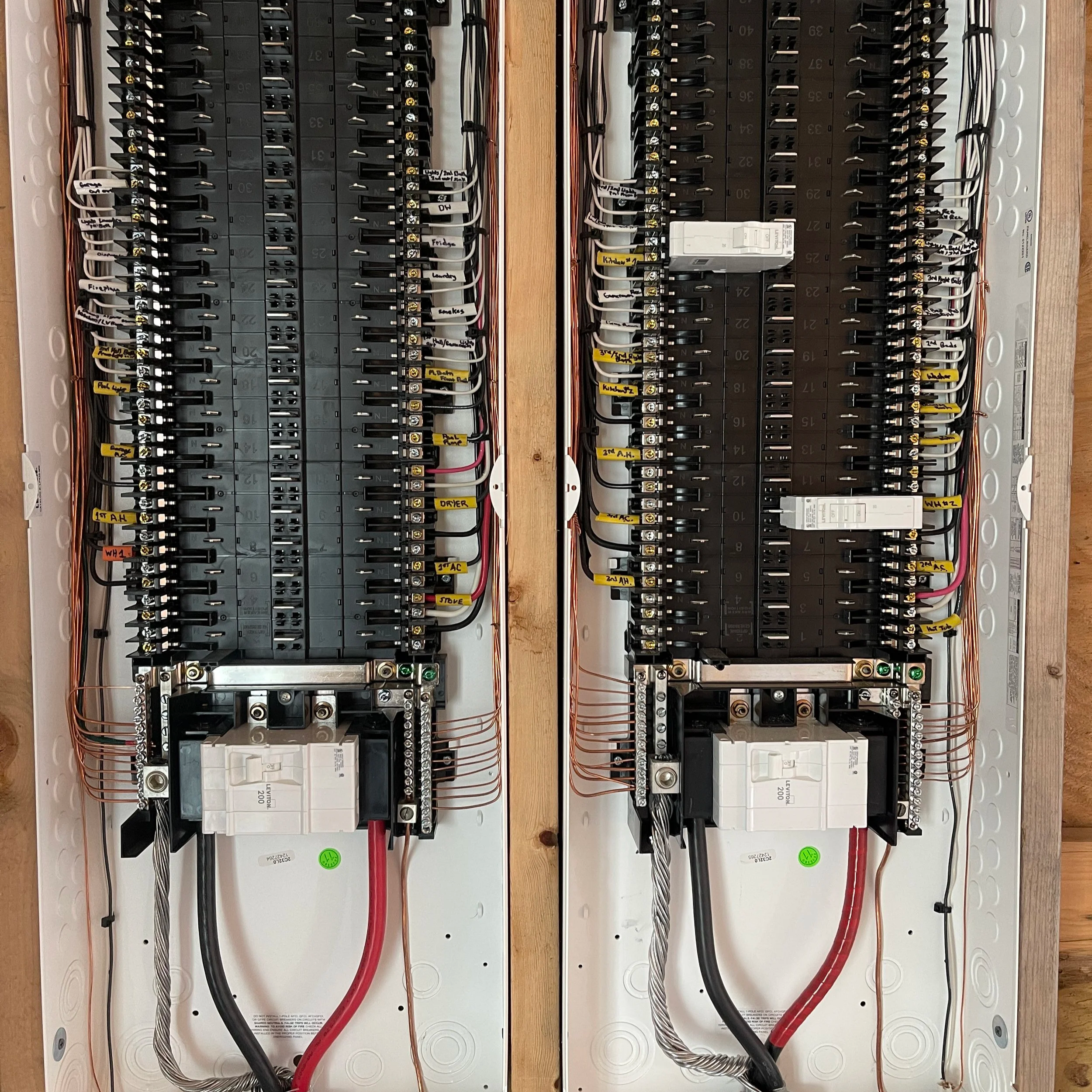
A panel upgrade is not a glamorous home improvement project, but it is one of the ones that most directly affects your daily quality of life and your home's safety profile.
You reset that breaker again. Third time this week, and all you did was run the microwave and the coffee maker at the same time. Your panel is not failing dramatically — it is just quietly telling you that it was not designed for the life you are living in it. Electrical panels in Norfolk, VA, homes have a way of staying invisible until they can no longer keep up, and by the time most homeowners start asking questions about a panel upgrade, they have already been dealing with a problem longer than they realize. The panel that came with your house when you bought it was sized and configured for a different era of household electricity use, and the gap between what it was built to handle and what you are actually drawing from it tends to grow a little every year.
What makes this particularly relevant for Norfolk, VA, homeowners is the combination of factors at play: an older housing stock across many neighborhoods, coastal humidity that accelerates corrosion inside electrical equipment, and the increasing electrical demand that comes with modern appliances, HVAC systems, and the growing number of households adding EV chargers or solar installations. A panel upgrade is not a glamorous home improvement project, but it is one of the ones that most directly affects your daily quality of life and your home's safety profile. Castles Electrical handles panel upgrades throughout the Norfolk area regularly enough to give you an honest account of what the process involves, what you can expect to pay, and how to know whether you are actually at the point where replacement is the right call.
How to Know When Your Panel Actually Needs to Be Replaced
The clearest sign that a panel needs attention is also the most annoying: breakers that trip repeatedly under normal household loads. Not the occasional trip caused by someone running a shop vacuum and a hair dryer simultaneously, but breakers tripping when the household is doing nothing unusual. If you can name two or three circuits in your home that you have learned to work around — never running the microwave and a toaster at the same time, never using the vacuum in a certain room while the window unit is on — that behavioral adaptation is a sign that your panel is already constraining how you live in your home. A well-functioning panel with adequate capacity should not require you to manage what you run and where consciously.
Beyond nuisance tripping, there are physical signs that warrant a professional evaluation. A panel that feels warm to the touch on the front cover, a burning or hot plastic smell near the electrical panel, visible corrosion or moisture inside the panel, breakers that do not stay in the on position, or a panel that buzzes or hums more than a very faint background noise all indicate problems that need attention sooner rather than later. In Norfolk, VA, coastal humidity adds the specific concern of corrosion within panels that have been in service for decades, which can compromise connection quality and create heat and fire risks. If your panel is original to a home built before 1990 and has never been evaluated by a licensed electrician, scheduling that evaluation is the practical starting point.
Federal Pacific and Zinsco Panels: The Specific Problem
Among the reasons homeowners need panel replacements beyond simple aging, the two most commonly cited in the industry are Federal Pacific Electric (FPE) Stab-Lok panels and Zinsco (also sold under the Sylvania brand) panels. Both were widely installed from roughly the 1950s through the 1980s, and both have documented histories of breaker failures. The issue with these panels is not cosmetic — it is functional. Breakers in these panels have been shown to fail to trip under overload conditions, which is the one job a breaker absolutely must do. A breaker that does not trip when a circuit is overloaded allows the wiring to carry more current than it is rated for, generating heat and increasing the risk of fire in the walls.
If you know or suspect your home in Norfolk, VA, has an FPE or Zinsco panel, having a licensed electrician evaluate it is the appropriate first step. The presence of one of these panels does not automatically mean there is an active hazard, but it does indicate a known risk factor that warrants an informed decision rather than the continued assumption that everything is fine. Insurance carriers have begun flagging these panels in some markets, and certain carriers will not write or renew policies on homes with identified FPE or Zinsco panels without replacement. Castles Electrical has replaced a significant number of these panels in Norfolk, VA, homes, and the process is typically straightforward, even if the reason for doing it is frustrating.
What Pael Upgrade Costs in Norfolk Actually Look Like
Panel upgrade costs in Norfolk, VA, vary by project scope, but a realistic range for a standard upgrade from a 100-amp panel to a 200-amp panel in a typical residential setting is approximately $1,500 to $3,500. That range accounts for the cost of the new panel and hardware, the labor to make the transfer, the permit fees, and the utility coordination required to upgrade the meter base and service entrance if needed. The low end of that range applies to relatively straightforward situations where the service entrance can accommodate the upgrade without significant modification, and the wiring is in good enough condition that no additional remediation is needed. The high end applies to older homes, more complex configurations, or situations where the service entrance itself needs to be updated to support the higher amperage.
Specific factors that push the cost higher include homes where the service entrance wiring is undersized for 200-amp service and needs to be replaced, homes where the existing panel location creates a difficult installation scenario, and homes where the utility connection point needs to be moved or upgraded as part of the project. In Norfolk, VA, Dominion Energy handles the utility side of the upgrade, which includes temporarily disconnecting power, updating or replacing the meter base if needed, and reconnecting after the work passes inspection. Castles Electrical coordinates the utility side of this process directly, including scheduling the disconnect and reconnect in coordination with the city's permit process. Understanding that the utility coordination timeline affects when the project can be completed is important for setting realistic expectations.
The Difference Between 100-Amp, 200-Amp, and 400-Amp Service
A 100-amp service was the standard residential upgrade from the original 60-amp service that many older homes were built with, and it was adequate for the household loads of its era. For most modern households running central HVAC, a washer and dryer, multiple refrigerators, a home office, and consumer electronics, 100 amps is workable but tight. Add an EV charger or an electric water heater to that mix, and 100 amps starts running short. A 200-amp service provides the headroom that most modern single-family households need to operate comfortably without chronic capacity concerns. For the majority of Norfolk, VA, homes, a 200-amp service upgrade is the standard recommendation and appropriate endpoint for the project.
A 400-amp service is relevant for larger homes with high-demand electrical loads: large HVAC systems, electric vehicle charging for multiple vehicles, whole-home electric backup systems, home workshops with heavy equipment, or properties where a significant portion of the heating and cooking load has been converted from gas to electric. The installation cost is higher, and not every utility connection point supports 400-amp service without additional infrastructure work. If you are evaluating whether 200-amp or 400-amp service makes sense for your specific situation in Norfolk, VA, the right answer depends on what you are running now and what you reasonably anticipate adding in the next five to ten years. Castles Electrical walks homeowners through that load calculation as part of the upgrade planning process, so you are not guessing at the appropriate service level.
Permits, Inspections, and Why They Matter
A panel upgrade in Norfolk, VA, requires a city permit and a final inspection by a city electrical inspector before the work is considered complete. This is not optional, and it is not something a reputable licensed electrician will skip. The permit process exists because a panel upgrade is a significant modification to the safety-critical infrastructure of your home, and independent inspection by the city verifies that the work was done correctly. Homeowners who are quoted a lower price for panel upgrades without permits should understand that they are accepting liability for unpermitted work that has not been verified and that may create complications during a future sale or insurance claim.
The inspection process in Norfolk follows the project from permit issuance through final approval. The city inspector reviews the completed work against code requirements, which in Virginia follow the National Electrical Code with state amendments. For most straightforward panel upgrades performed by a licensed electrician, the inspection process is routine and does not result in significant rework. When Castles Electrical pulls a permit for a panel upgrade in Norfolk, VA, the permit documentation and the final inspection record become part of the home's permanent record, which has real value when you eventually sell the property. Buyers and their agents increasingly request documentation of electrical work, and a permitted and inspected panel upgrade provides a clear, verifiable record that the work was done properly.
Panel Upgrade Coming Up? Know Exactly What to Expect Before Work Begins
How long does a panel upgrade take to complete?
For a standard residential panel upgrade in Norfolk, VA, the actual installation work typically takes one day for the electrician's crew. The overall project timeline is longer because it includes permit application, utility coordination with Dominion Energy for the temporary disconnect and reconnect, and the city inspection appointment. From the time a contract is signed to the time the project is complete and inspected, a realistic timeline is one to three weeks, depending on permit processing times and utility scheduling. Castles Electrical manages permit and utility coordination and will provide you with a project timeline specific to your situation.
Can I stay in my home during the panel upgrade?
Yes, though there will be a period during the project when your home's power is off. The length of the outage depends on the scope of the project, but for a straightforward panel swap, it is typically a few hours. Castles Electrical schedules the power outage window in coordination with the homeowner and tries to minimize the disruption to your daily routine. If you work from home and need to maintain power for a longer portion of the day, that is a conversation worth having when scheduling the project.
Will a panel upgrade reduce my homeowner's insurance premium?
Some insurance carriers offer reduced premiums or remove surcharges associated with older or problematic panels after a documented upgrade to a modern panel. The impact varies by carrier and your current panel situation. If you have an identified FPE or Zinsco panel, replacing it may remove a surcharge or allow you to obtain coverage that was previously unavailable. It is worth contacting your insurance carrier after a panel upgrade to report the improvement and ask whether it affects your rate or coverage terms.
What happens to the existing wiring when the panel is replaced?
The wiring throughout your home is not replaced as part of a panel upgrade. The upgrade replaces the panel itself, the main breaker, and the service entrance conductors as needed, and reconnects your existing branch circuit wiring to the new panel. If the existing wiring has concerns that need to be addressed, those are evaluated and priced separately. A panel upgrade is not a whole-home rewiring project, though the two are sometimes done together when the existing wiring condition warrants it.
How do I find out how many amps my current panel is rated for?
The amperage rating of your panel is typically listed on the main breaker, which is the large breaker at the top of the panel before the branch circuit breakers. It may also be listed on a label inside the panel door. If you cannot locate that information, a licensed electrician can identify it during a service call or inspection. If the number on the main breaker is 100 or less, it is worth discussing an upgrade with an electrician to understand whether your current service capacity is appropriate for your household's actual electrical load.
Castles Electrical offers electrical panel installation, electrical panel replacement, whole home rewiring, new construction wiring, generator installation, and backup power solutions to home and business owners in the Virginia Beach area. As a family-owned business, safety and quality are our top priorities. Call today to schedule an appointment.